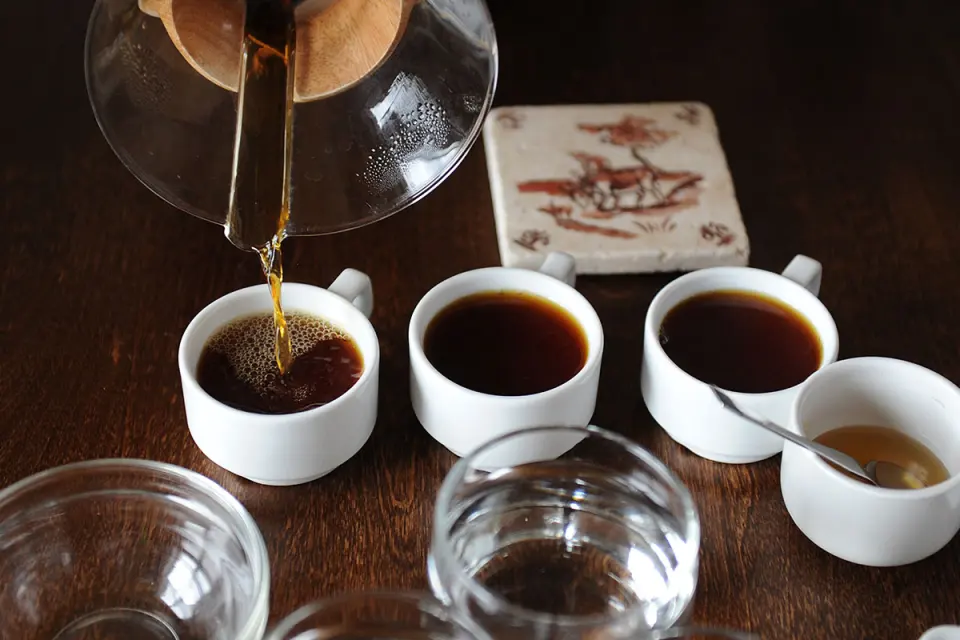
Pull & Pour's tasting guide separates aroma, body, flavor, acidity, balance, cleanliness, sweetness, aftertaste, complexity and brewing flexibility. The framework gives a drinker specific questions instead of asking for an immediate overall number. Smell the dry grounds, wet coffee and finished drink; then distinguish what the coffee tastes like from how heavy, light, creamy or drying it feels.
The source encourages food comparisons while recognizing that perception is subjective. Brightness can resemble citrus or apple without making one style automatically superior, and sweetness may evoke fruit, caramel or chocolate without those foods being ingredients. Observe what remains after swallowing and revisit the cup as it cools. A clear note about lingering bitterness or changing sweetness can be more useful than an elaborate descriptor.
The guide's numerical average and inclusion of method flexibility belong to the author's personal review system, not a professional certification or universal grading standard. A coffee can be excellent for its intended use without excelling in every brewer. Keep the recipe and tasting conditions with your notes, compare like with like, and treat descriptive vocabulary as a way to communicate your experience rather than a test of whether you can repeat someone else's exact words.
The conversation
A good question can make a better brew.